

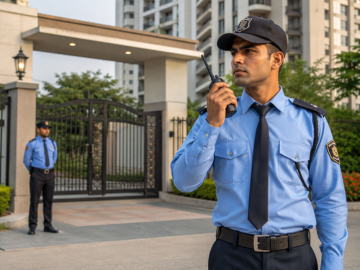
Businesses often focus on security during working hours because employees, customers, suppliers, and visitors are constantly moving through the premises. However, office security remains equally important after employees leave for the day, during weekends, on public holidays, and throughout planned shutdowns. In fact, these periods can create additional security challenges because fewer people are present to notice suspicious activity or respond to unexpected situations.
For businesses operating in Delhi, protecting office assets during closure periods requires a planned and consistent security approach. Offices may contain expensive computers, confidential documents, communication equipment, company vehicles, and other valuable resources. Furthermore, an unattended building can become vulnerable to unauthorised entry, theft, property damage, and other security incidents if appropriate precautions are not in place.
Professional security services in Delhi can help businesses address these risks through access control, scheduled patrols, surveillance monitoring, emergency procedures, and coordination with authorised personnel. By establishing clear responsibilities before an office closes, organisations can protect their premises more effectively and reduce the likelihood of avoidable losses.
Why Office Closure Periods Require Additional Security Planning
An office may appear secure when employees are present, but the situation changes considerably after normal working hours. During the day, staff members, reception teams, facility managers, and visitors create regular activity throughout the building. Consequently, unusual behaviour or unexpected access may be noticed quickly.
However, once the office closes, fewer people remain available to identify potential problems. Moreover, certain activities, such as cleaning, equipment maintenance, deliveries, and contractor visits, may continue outside normal business hours.
Several risks deserve attention during these periods:
- Unauthorised entry: Individuals may attempt to enter the premises without approval, particularly when access procedures are inconsistent.
- Theft of business assets: Computers, laptops, tools, office equipment, and other valuable items may be exposed if storage areas are not properly secured.
- Damage to property: Water leaks, electrical problems, fire hazards, and accidental damage may go unnoticed for extended periods.
- Misuse of access credentials: Lost access cards, duplicated keys, and outdated permissions can create unnecessary security risks.
- Unauthorised contractor activity: Maintenance personnel or other service providers may access restricted areas without adequate supervision.
- Security gaps during holidays: Reduced staffing and altered building routines may make it more difficult to identify unusual activity.
Therefore, businesses should treat office security during closure as an essential part of their overall risk management strategy rather than a routine end-of-day responsibility.
How Professional Office Security Services in Delhi Help Protect Office Assets
1. Controlling Access After Working Hours
One of the most important responsibilities of office security is ensuring that only authorised individuals can enter the premises. Although access control may be straightforward during business hours, it becomes more complicated when employees leave and only a limited number of people are permitted inside.
Professional security personnel can verify entry permissions, maintain visitor records, and check the purpose of after-hours visits. Additionally, they can confirm whether contractors, cleaners, and maintenance workers have received the necessary authorisation.
For example, a technician arriving late in the evening to repair office equipment should not automatically receive unrestricted access to the entire building. Instead, the office security team can verify the appointment, confirm the approved work area, and follow the organisation’s entry procedure.
Similarly, businesses should review access permissions whenever employees leave the organisation or change roles. By coordinating these reviews with management, office security teams can help prevent former employees or unauthorised visitors from entering restricted areas.
2. Conducting Scheduled Security Patrols
Security patrols provide an opportunity to identify problems that may not be visible from a reception desk or monitoring station. During closure periods, guards can inspect designated areas according to an established schedule.
These inspections may include:
- Office entrances, exits, and emergency doors.
- Meeting rooms, workstations, and equipment storage areas.
- Server rooms and other restricted spaces.
- Stairwells, corridors, parking areas, and loading zones.
- Windows, perimeter access points, and less frequently used entrances.
- Areas where maintenance work or temporary storage is taking place.
Moreover, patrols can help identify unlocked doors, damaged locks, broken windows, unusual smells, and other signs that require attention.
However, patrols should follow a defined procedure rather than relying entirely on informal observation. Security personnel should record relevant findings and report concerns to the appropriate contact. As a result, management can review recurring problems and arrange corrective action before they become more serious.
3. Protecting Computers, Documents, and Valuable Equipment
Office assets include more than expensive electronic devices. Business records, confidential files, specialised tools, company identification cards, and physical storage media can also have considerable value.
Therefore, security arrangements should consider both the financial and operational importance of these items.
Security guards can help monitor access to equipment rooms and storage areas. In addition, they can check whether designated doors have been secured and whether any unusual movement has occurred during a patrol.
Businesses should also establish internal procedures for protecting valuable assets. For instance, employees can be required to store laptops securely, remove confidential documents from open desks, and lock cabinets before leaving.
Furthermore, particularly valuable equipment should be recorded in an asset register. Although security personnel are not responsible for independently auditing every company item, accurate records can help management investigate discrepancies when necessary.
4. Monitoring CCTV and Other Security Systems
Surveillance systems can support office security by providing visibility into entrances, corridors, parking areas, and other designated locations. Nevertheless, cameras are most useful when they form part of a broader security process.
During office closure periods, authorised monitoring personnel can observe available camera feeds and identify unusual activity. If a concern arises, they can follow the established escalation procedure and notify the relevant personnel.
For example, repeated movement near a restricted entrance may require further investigation. Similarly, an unexpected vehicle parked near a loading area may need to be checked according to site procedures.
However, CCTV should not be treated as a replacement for physical security. Cameras cannot independently secure an unlocked door, verify every visitor’s identity, or respond physically to an incident. Therefore, combining surveillance with access control and regular patrols can provide a more effective approach.
Businesses should also ensure that surveillance arrangements comply with applicable privacy requirements and that access to recordings is appropriately restricted.
5. Securing the Premises During Weekends and Public Holidays
Extended closure periods require particular attention because normal business activity may stop for several consecutive days. Consequently, problems that occur shortly after the office closes could remain undetected until employees return.
Before a planned closure, management should confirm that the office security team has received the relevant instructions. These instructions should cover authorised access, emergency contacts, scheduled maintenance, deliveries, and any areas requiring additional monitoring.
Furthermore, the business should identify who can approve entry during the closure period. Without a clear approval process, security personnel may face uncertainty when an employee or contractor requests access unexpectedly.
A holiday security plan should include:
- A list of authorised personnel who may enter the premises.
- Updated emergency and management contact details.
- Instructions for handling unexpected visitors.
- Patrol schedules and reporting requirements.
- Procedures for reporting fire, water, electrical, or structural concerns.
- Arrangements for authorised deliveries and maintenance activities.
As a result, security personnel can respond more consistently even when the usual management team is unavailable.
6. Managing Contractors and After-Hours Maintenance
Many offices continue to require maintenance when employees are absent. Cleaning staff, electricians, internet technicians, air-conditioning contractors, and other service providers may need access outside normal working hours.
Although these activities are often necessary, they can introduce additional office security risks if access is not controlled.
Professional security personnel can verify approved work schedules, maintain entry and exit records, and direct contractors to designated areas. Moreover, they can report unexpected changes in the scope of work or requests to enter restricted rooms.
For example, a contractor assigned to repair lighting in a corridor should not automatically receive access to a records room or server area. Clear authorisation procedures help ensure that access remains limited to the task being performed.
In addition, management should communicate planned maintenance activities to the office security team in advance. This reduces confusion and helps guards distinguish legitimate work from unexpected activity.
7. Responding to Emergencies During Office Closures
Office security involves more than preventing theft. Fire alarms, electrical faults, water leaks, equipment failures, and other emergencies can also threaten property and business continuity.
During closure periods, these incidents may develop without immediate assistance from employees. Therefore, security personnel should understand how to report emergencies and contact the appropriate response teams.
Depending on their training and responsibilities, guards may observe warning signs, raise an alarm, restrict access to an affected area, and follow established evacuation or emergency procedures.
However, they should not attempt technical repairs or hazardous interventions beyond their training. Instead, they should notify the relevant emergency services, facility managers, or authorised technicians.
Timely reporting is particularly important because even a relatively small incident can cause significant damage when it remains unnoticed for several hours.
Building an Effective Office Closure Security Checklist
Although professional security personnel play an important role, businesses should also establish a consistent closing routine. When employees, facility teams, and office security staff follow the same procedure, fewer responsibilities are overlooked.
A practical checklist may include the following tasks:
- Confirm that employees have left areas scheduled for closure.
- Secure windows, entrances, and other designated access points.
- Check that restricted rooms and storage areas are locked.
- Ensure that sensitive documents and valuable devices are stored appropriately.
- Verify that approved CCTV and alarm systems are operating as intended.
- Review any scheduled contractor visits or deliveries.
- Confirm that emergency contact information is current.
- Record unresolved maintenance or security concerns.
- Communicate any unusual activity to the designated manager.
Additionally, businesses should review the checklist periodically. Changes in office layout, staffing arrangements, equipment storage, or operating hours may require updates to existing procedures.
Choosing the Right Security Arrangement for Your Office
Different offices require different security arrangements. A small administrative office may need controlled entry and periodic patrols, while a large corporate building may require reception security, multiple patrol points, surveillance monitoring, and coordination across several departments.
Therefore, businesses should assess their premises before deciding on a security arrangement.
Important considerations include the value of assets, number of entrances, surrounding environment, operating schedule, availability of surveillance systems, and frequency of after-hours visits.
Moreover, security responsibilities should be clearly documented. Management should understand which tasks are handled by guards, which are managed by facility personnel, and which require technical specialists.
Regular reviews can also help identify weaknesses. For example, repeated unauthorised access attempts may indicate that access permissions need to be revised. Similarly, recurring issues with unlocked doors may require better employee awareness or improvements to closing procedures.
Ultimately, the objective is to establish a office security system that is practical, consistent, and suitable for the organisation’s actual risks.
Conclusion
Protecting business assets during office closure periods requires more than locking the main entrance at the end of the day. It involves controlled access, regular patrols, appropriate surveillance, contractor verification, emergency preparedness, and clear communication between management and security personnel. Furthermore, consistent closing procedures can help reduce security gaps during weekends, public holidays, and extended shutdowns.
Businesses looking for dependable office security support can consider Om Sai Safeguard Services for professional security arrangements tailored to their premises and operational requirements. With an emphasis on disciplined security practices, access monitoring, and timely reporting, Om Sai Safeguard Services can help organisations strengthen their office security and protect valuable business assets beyond normal working hours.


