

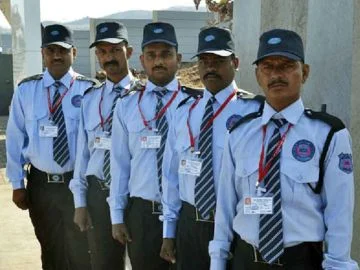
Office security Delhi helps large commercial buildings manage complex movement, access and safety requirements. Large commercial buildings can function almost like small communities. Multiple businesses may operate under one roof, employees can work across several floors, visitors arrive for meetings, contractors carry out maintenance, and delivery personnel move between loading areas and designated offices.
Because of this complexity, maintaining security across a large commercial building requires coordination across many different spaces.
Office security in Delhi can support this environment by managing access points, monitoring employee and visitor movement, protecting restricted areas, conducting patrols, supervising common spaces, and coordinating with building management.
The role is not limited to standing at reception. Instead, security personnel can help maintain awareness across the wider property while allowing businesses to continue their normal operations.
Office Security Delhi: Understanding Large Commercial Buildings
A large commercial property may contain several entrances, reception areas, elevators, stairways, parking facilities, loading zones, tenant offices, meeting rooms, service areas, and restricted sections.
Each area can have different security requirements.
For example, the main entrance may experience heavy visitor traffic, while a service entrance may mainly be used by contractors and suppliers. Similarly, a parking facility may require vehicle monitoring rather than the same type of access control used inside office areas.
Security personnel therefore need to understand how the different parts of the building operate together.
This broader awareness helps create a more coordinated security environment.
Managing Different Entrances
Large buildings frequently have separate access points for different purposes. Office security Delhi teams can help manage these entrances according to the building’s access procedures.
Employees may use designated entrances, visitors may enter through reception, and delivery personnel may use loading areas. Contractors may also have specific access routes.
Office security personnel can help ensure that people use the appropriate entrance according to their purpose.
This reduces unnecessary movement and gives security teams greater visibility over who is entering different parts of the property.
Additionally, separate access procedures can make busy periods easier to manage.
Handling High Employee Traffic
Large offices may have hundreds of employees arriving and leaving within a relatively short period.
During these times, security checkpoints and building entrances can become crowded.
Security personnel can help maintain an organized flow while monitoring access requirements. This is an important part of office security Delhi for buildings with high employee traffic.
For example, employees may use access cards or other established identification systems. Security guards can monitor the process and address access problems when they arise.
This can help prevent unnecessary congestion without weakening access control.
Coordinating Multiple Floors
A large commercial building may contain several companies or departments across different floors.
As a result, security personnel may need to understand which areas are open to the general workforce and which areas have restricted access.
Regular patrols can help maintain awareness across these different sections. Effective office security Delhi can use scheduled patrols to provide visibility beyond fixed security positions.
If an employee needs access to a restricted floor or area, the appropriate authorization process can be followed.
This creates a clearer distinction between general workplace areas and locations requiring additional control.
Monitoring Restricted Workplace Areas
Certain areas within commercial buildings may contain sensitive equipment, information, or infrastructure.
These can include server rooms, records rooms, management offices, electrical rooms, storage facilities, and building control areas.
Security personnel can monitor access to these spaces according to the property’s rules.
Rather than allowing unrestricted movement, guards can verify whether individuals are authorized to enter.
This becomes particularly important in buildings occupied by multiple businesses because employees from one organization may not automatically have access to another organization’s restricted areas.
Managing Visitors Across Large Properties
Visitors can include clients, business partners, candidates, consultants, suppliers, and other guests.
A visitor who enters a large commercial building may not know where to go or which areas they are permitted to access.
Security personnel can support the reception process by verifying the visitor’s destination and directing them appropriately. This visitor-management function is a key part of office security Delhi in large commercial properties.
Depending on the building’s procedures, visitors may also receive temporary access passes or remain in designated areas until the relevant employee arrives.
This helps maintain visibility over visitor movement.
Contractor Access and Maintenance Work
Large commercial buildings depend on contractors for cleaning, electrical work, repairs, air-conditioning maintenance, networking, construction, and other services.
These workers may need access to areas that ordinary visitors cannot enter.
Security personnel can verify their authorization and direct them to the relevant location.
If maintenance work is scheduled in a restricted area, security staff can coordinate with building management or the responsible department.
Consequently, contractors can carry out their work while access remains controlled.
Monitoring Loading and Service Areas
Loading areas can experience a different type of traffic from office entrances.
Delivery vehicles, suppliers, maintenance teams, and other service personnel may arrive throughout the day.
Security guards can monitor these areas, verify delivery information, and direct vehicles according to the property’s procedures. Office security Delhi can therefore extend beyond the main reception area to loading and service zones.
This can help prevent delivery personnel from entering employee areas unnecessarily.
Furthermore, organized loading areas can reduce congestion around the main entrance.
Managing Parking Facilities
Large commercial properties may have underground parking, surface parking, visitor spaces, and designated areas for service vehicles.
Security personnel can monitor vehicle movement and help enforce the property’s parking procedures.
This may include checking access credentials, directing visitors to designated parking spaces, and monitoring restricted or reserved areas.
During busy periods, security personnel can also help manage congestion at vehicle entrances and exits.
Conducting Building-Wide Patrols
Patrols are particularly relevant in large buildings because a fixed security position cannot provide visibility across every location.
Security personnel can conduct scheduled or required patrols across common areas, corridors, parking facilities, entrances, service zones, and other relevant locations. For large properties, office security Delhi can use these patrols to maintain wider building awareness.
During these patrols, guards can observe conditions such as unsecured doors, unusual activity, damaged access points, lighting problems, or maintenance concerns.
Any relevant observations can then be reported through the established process.
Security During Employee Shift Changes
Some commercial buildings operate beyond traditional business hours.
Businesses may have early-morning teams, evening staff, customer support operations, or other extended schedules.
Shift changes can therefore create periods of increased movement.
Security personnel can monitor entrances, parking facilities, elevators, and other high-traffic areas during these transitions.
This helps maintain consistent access control even when the building’s occupancy changes throughout the day.
Managing Large Meetings and Corporate Events
Large offices may host conferences, training sessions, recruitment drives, client events, or other gatherings.
These activities can temporarily change normal building movement.
Security personnel can support the event by monitoring designated entrances, guiding visitors, managing restricted areas, and coordinating with organizers. These arrangements can form part of office security Delhi for large meetings and corporate events.
If a large number of visitors are expected, security arrangements can be adjusted in advance to reduce confusion at reception and entry points.
Monitoring Common Areas
Commercial buildings contain many shared spaces.
These can include:
- Reception areas
- Elevators
- Corridors
- Waiting areas
- Cafeterias
- Stairways
- Parking facilities
- Shared meeting spaces
Security personnel can monitor these locations during regular patrols and respond to situations that require attention.
This is particularly useful in buildings where several organizations share the same facilities.
Emergency Coordination Across Large Buildings
The larger the building, the more important coordinated emergency procedures become.
During a fire alarm, medical incident, security concern, or other emergency, security personnel may need to coordinate with building management and emergency responders.
Depending on their training and established procedures, they may help control access, direct people toward appropriate exits, keep emergency routes clear, and provide responders with access to the affected area.
Because large buildings can have several entrances and levels, clear coordination is especially important.
Communication Between Security Personnel
Large properties may require several security guards working at different locations.
One guard may monitor reception while others cover parking, entrances, patrol routes, or service areas.
Communication allows these personnel to share important information.
For example, if an unexpected visitor arrives at the main entrance, the relevant department can be contacted. If a maintenance issue is discovered during a patrol, the information can be passed to building management.
Without effective communication, information can remain isolated.
Therefore, clear reporting procedures help connect different parts of the security operation.
Using Technology Across Commercial Properties
Modern commercial buildings can use technology to support security operations.
CCTV systems can provide visibility across multiple areas, while access control systems can help regulate entry to specific floors or rooms. Visitor management platforms can organize guest information, and communication systems can connect security personnel.
However, technology is most effective when supported by trained guards.
Security personnel can interpret alerts, verify people, communicate with employees, and respond to circumstances that automated systems cannot fully understand.
Therefore, technology should complement rather than replace physical security operations.
Supporting Business Continuity
Security also contributes to the smooth operation of a commercial building.
When entrances are organized, visitors are directed correctly, restricted areas remain controlled, and unusual situations are addressed promptly, businesses can continue operating with fewer unnecessary disruptions.
Security personnel can also report maintenance or access issues that may affect building operations.
This means their observations can contribute to more than physical security.
Reviewing Security Across the Building
Commercial buildings do not remain static.
New tenants may move in, office layouts can change, employee numbers can increase, and new entrances or facilities may be introduced.
Therefore, security arrangements should be reviewed periodically. Regular reviews help office security Delhi teams and building management identify access, visitor and patrol issues that may require adjustment.
Building management and security teams can examine visitor traffic, incident records, patrol observations, access problems, and areas experiencing recurring issues.
This information can help determine whether existing procedures continue to meet the building’s needs.
Related Security Resources
Businesses and property managers can explore security services in Delhi for broader professional security requirements and related protection solutions.
For general public-safety information, readers can also refer to Delhi Police and the National Disaster Management Authority.
Conclusion
Large commercial buildings require coordinated security because employees, visitors, contractors, vehicles, and service personnel move through multiple areas every day. Office security in Delhi can support these environments by managing different entrances, monitoring employee and visitor movement, controlling restricted areas, supervising parking and loading zones, conducting patrols, and coordinating during emergencies. A structured office security Delhi plan can help connect these responsibilities across the property.
A well-organized security operation should also support normal business activity rather than unnecessarily interfere with it. Clear procedures, communication between security personnel, appropriate technology, and regular reviews can help maintain a controlled environment across large commercial properties.
For businesses and commercial property managers seeking professional security support, Om Sai Safeguard Services can provide trained personnel for access control, visitor management, patrolling, building monitoring, and security coordination. With structured procedures and professional security teams, Om Sai Safeguard Services can help large commercial buildings maintain organized security coverage across their different areas and operating hours.


